Three Launches in One Night: Claude Opus 5.5, GPT-6 Sol and Luna All Strike at Once
In one night, Anthropic shipped Claude Opus 5.5 (1M context, 40% lower cost, 66.4% on Terminal-Bench 4.0) while OpenAI launched GPT-6 Sol and Luna (50% below GPT-5.6, Luna input at just $0.10/M). Plus how the two giants diverge, the token trap, and a practical selection guide.
Three Launches in One Night: Claude Opus 5.5, GPT-6 Sol and Luna All Strike at Once
Channels Available in China
For developers and creators in China who want fast, no-VPN access, here are the API platforms, mirror sites, top-up channels and monthly plans you can reach directly:
| Channel | URL | Best for |
|---|---|---|
| High-speed GPT mirror in China | https://trygpt.asia/list/#/home | Browser-based chat without a VPN, lightweight workflow testing |
| MomoAI monthly plans | https://momoai.asia/home | Heavy users who want a stable monthly subscription |
| All-model API aggregator | https://tryallapi.com/ | Developer calls, low-latency direct connection, one-stop multi-model access |
| Official top-up channel | https://chongzhi.trygpt.asia/ | Removing the overseas credit-card barrier, official direct top-up |
I'm completely numb. Weren't these executives publicly saying just days ago that "model iteration should slow down"?
And the result? They're dumping new models like they cost nothing!
Yesterday Grok 4.7 and MiMo v2.6 were going at it head-to-head — turns out that was just the warm-up act for today's two "big brothers."
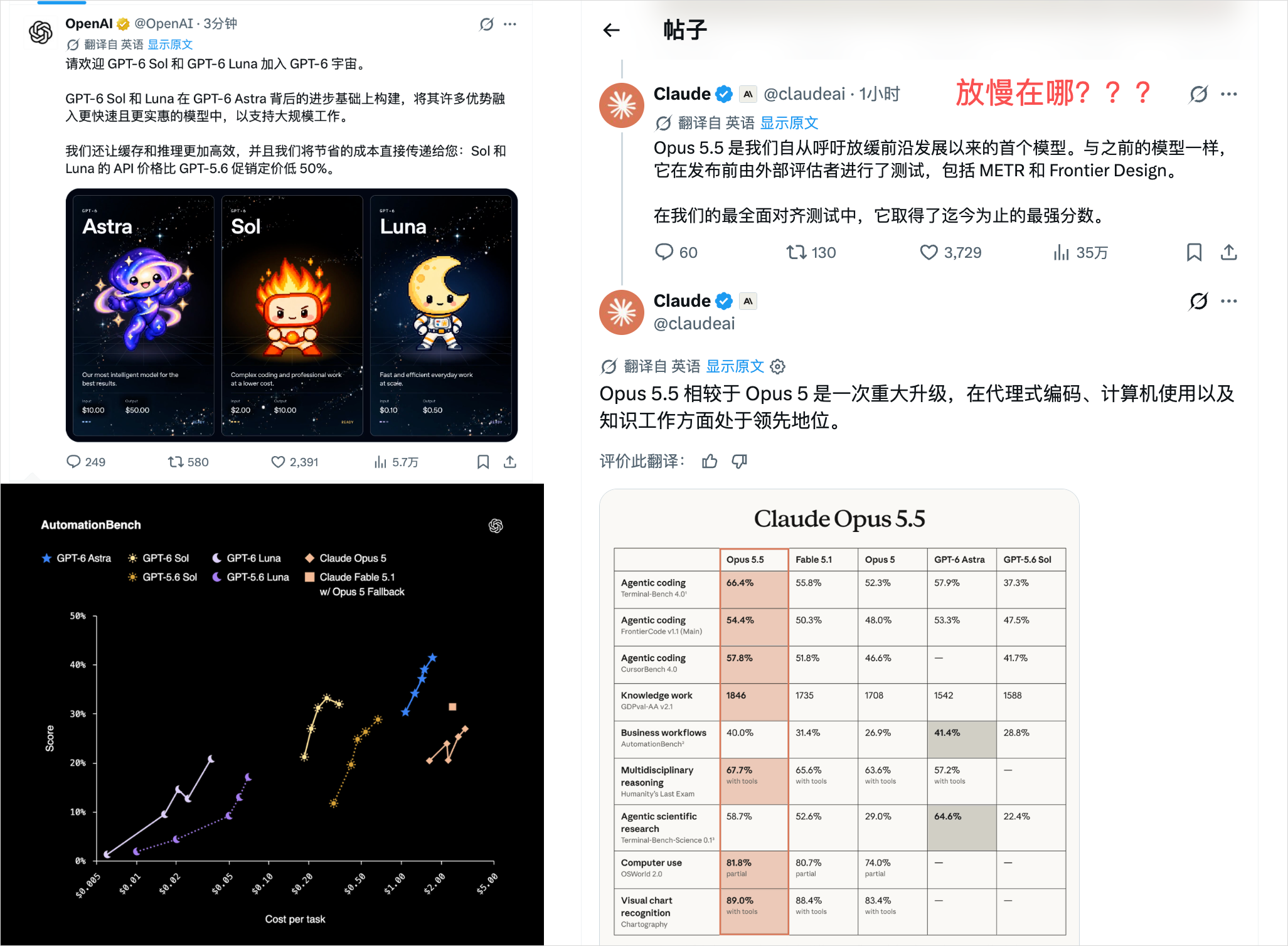
In the early hours of this morning, OpenAI unveiled GPT-6 Sol and GPT-6 Luna; and at almost the same second, Anthropic pulled out the brand-new Claude Opus 5.5.
▲ Cover: OpenAI and Anthropic clash head-on on the same day
I genuinely want to ask them face to face: you keep saying slow down — where exactly is the slowing down? Absolute scoundrels, all of you.
And this script felt oddly familiar, so I went back through my old posts — and sure enough:
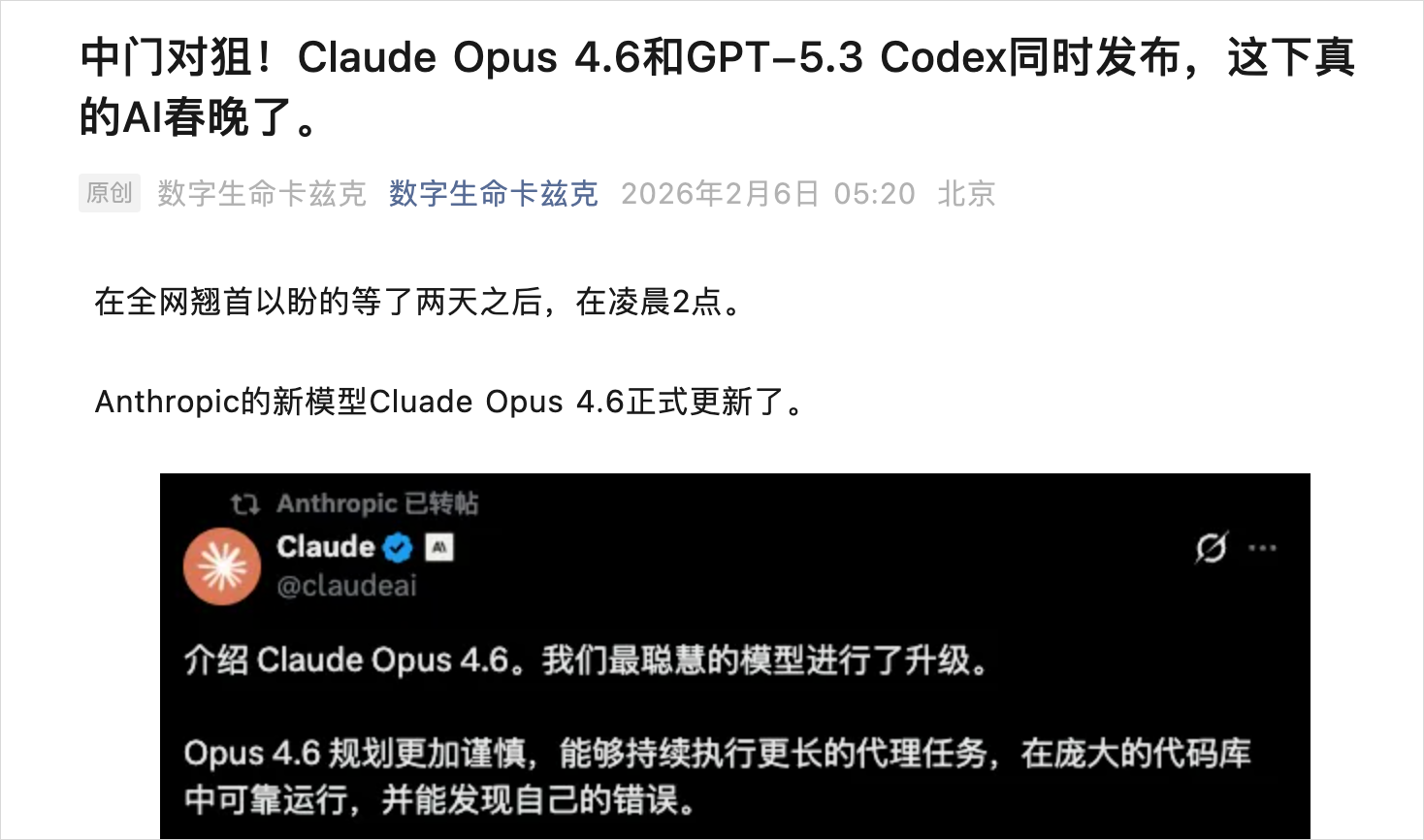 ▲ History repeats with eerie precision: GPT-5.3 Codex once went toe-to-toe with Claude Opus 4.6 on the very same day
History is replaying pixel for pixel:
- Claude Opus 4.6 evolved into Claude Opus 5.5;
- GPT-5.3 Codex became today's GPT-6 Sol.
Same two companies, same "if you've got a problem, let's settle it" destined rivalry.
Let's take them one at a time.
1. Claude Opus 5.5: The Old Flame Returns, at God-Tier Price-Performance
Claude first.
Frankly, no matter how much I complain about Anthropic's strict account controls — objectively, Claude is still the most capable and most well-rounded top-tier model in my book. I still clearly remember the cognitive shock of first using Claude Fable 5.
This Claude Opus 5.5 is the first vanguard model of Anthropic's brand-new 5.5 series, and a rare case of a single huge version jump.
Testing it through my channels, Opus 5.5 gave me a "back to Opus 4.6" feeling in how it communicates — it feels remarkably alive, no longer a cold code-generating machine. Although its official positioning is "the Claude line's ultimate price-performance workhorse," it has genuinely recovered that "old flame" quality.
Core Specs at a Glance
| Dimension | Spec |
|---|---|
| Official model name | claude-opus-5-5 |
| Context window | 1M tokens |
| Max single output | 128K tokens |
| Reliable knowledge cutoff | June 2026 |
| Thinking mechanism | Adaptive Thinking (always on automatically) |
| Default reasoning level | Medium |
| Standard input price | $4.00 / million tokens |
| Standard output price | $20.00 / million tokens |
| Prompt cache read | $0.20 / million tokens |
| 5-minute cache write | $5.00 / million tokens |
| 1-hour cache write | $8.00 / million tokens |
Versus the previous Opus 5, overall working cost drops a full 40%.
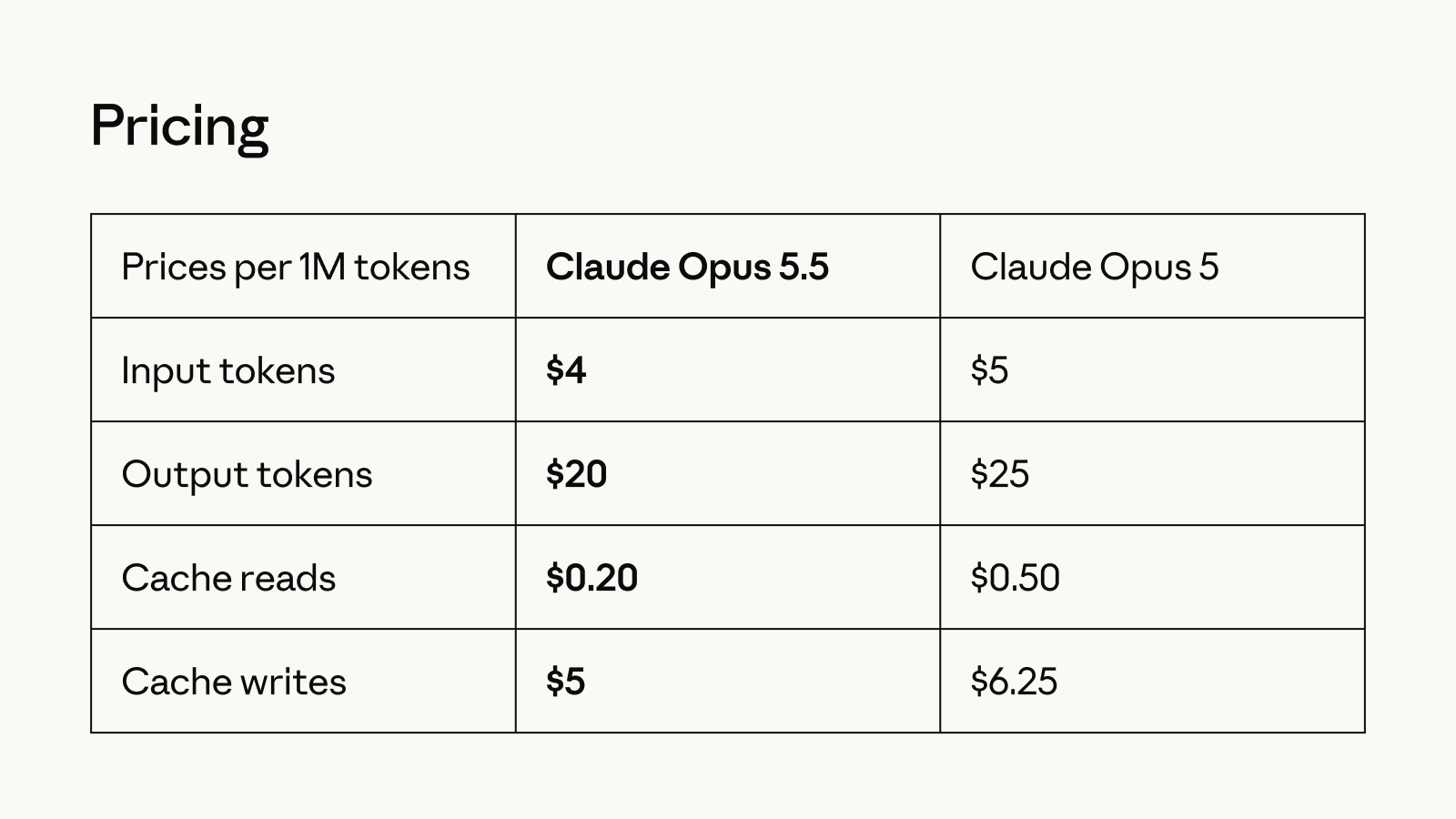 ▲ Opus 5.5 cuts prices sharply versus its predecessor — reasoning and cache costs both narrow across the board
And while cutting price, generation speed actually jumped more than 30% versus Opus 5.
On routine and medium-load tasks, Opus 5.5 can already deliver hard performance on par with Fable 5.1; only extremely complex architecture work truly needs an ultra-flagship like Fable to hold the line.
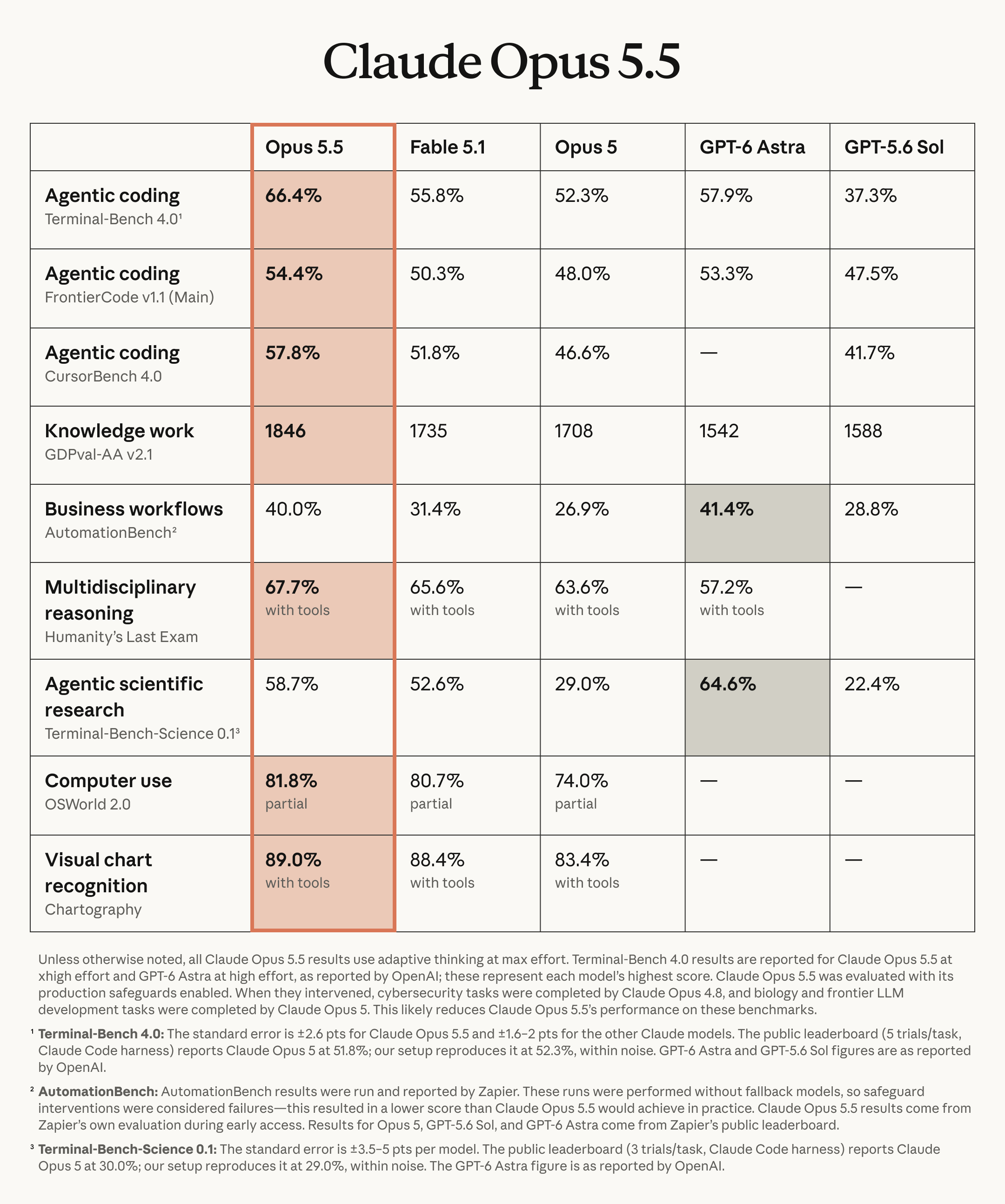 ▲ Mainstream benchmark matrix: Opus 5.5 shows absolute dominance on coding and terminal instructions
Coding Takes the Crown, and the Two Giants Diverge
On coding tasks, Opus 5.5 has basically refreshed current SOTA:
- On Terminal-Bench 4.0, which tests multi-step execution in complex real terminal environments, Opus 5.5 blasted out a record 66.4%;
- On essentially any code-dimension eval, it sweeps the board.
But the divergence is real:
- Science tasks (Terminal-Bench-Science): Opus 5.5 scores 58.7%, overtaken by OpenAI's GPT-6 Astra (64.6%);
- Cross-system orchestration (AutomationBench): Opus 5.5 scores 40.0%, GPT-6 Astra 41.4%;
- Computer Use: still OpenAI's absolute traditional stronghold.
The two giants' strategic directions are now very clear:
- Anthropic: deep in coding, extreme interaction aesthetics, textual texture — believing strong code ability is the core fulcrum on the path to AGI;
- OpenAI: all-in on the all-purpose agent — long-horizon reasoning, cross-tool software operation, and research automation.
The Hidden Trap: Beware "Over-Reasoning" Eating Your Budget
Opus 5.5 is essentially Anthropic's own high-quality distillation of Fable 5.1.
Smaller, cheaper, faster — but it comes with a fatal trap: token consumption inflation. Lacking the absolute intelligence ceiling of a huge-parameter model, a non-flagship can fall into a "think harder, try again, hit the wall" loop on extremely hard problems, and the total tokens burned can end up exceeding the flagship's.
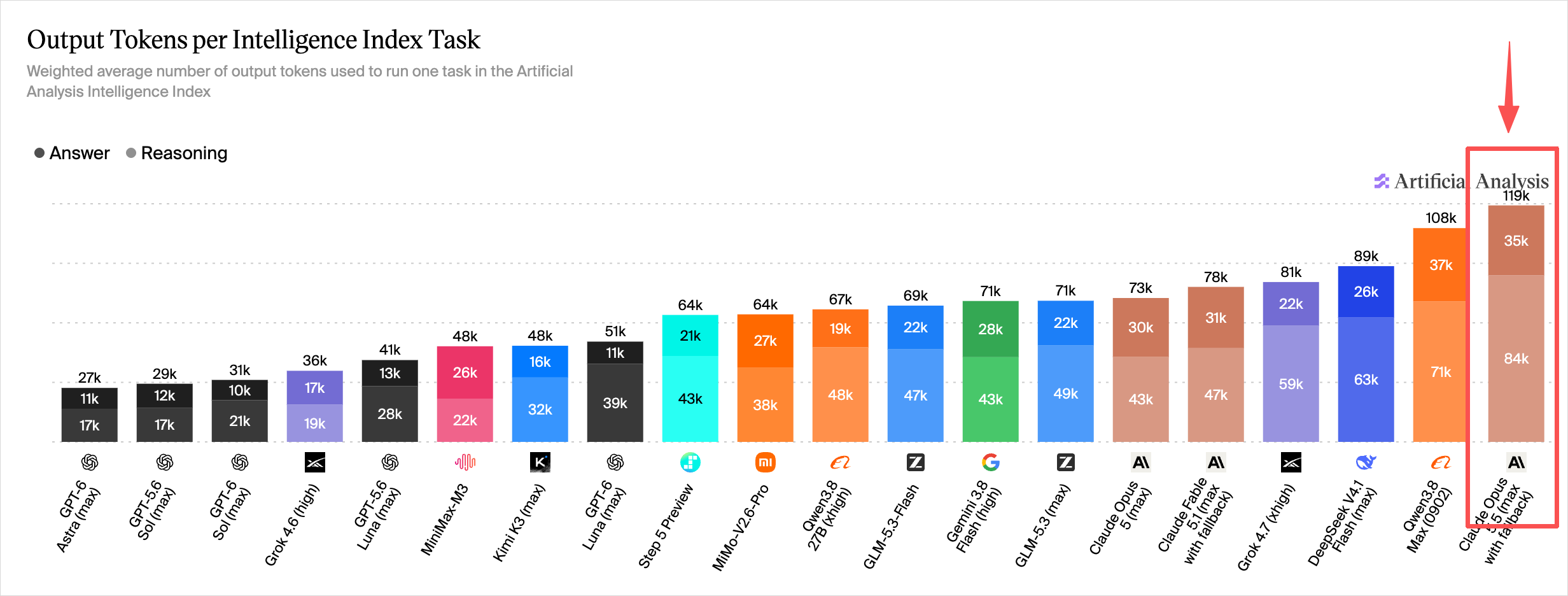 ▲ Output-token efficiency comparison: Opus 5.5 tends to spend massive reasoning tokens to buy high-intelligence answers
Much of Opus 5.5's intelligence is built from huge volumes of long reasoning tokens. Anthropic is refreshingly honest about the upgrade rule in its docs:
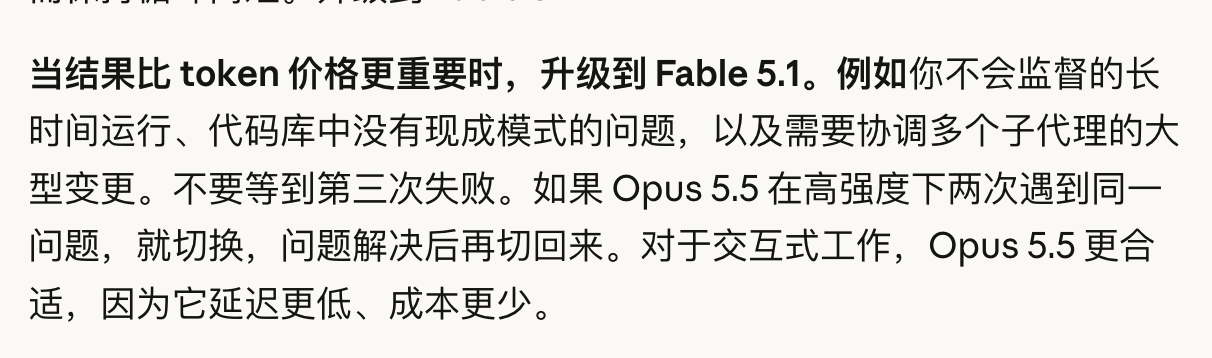 ▲ Official docs state it plainly: when absolute accuracy of the result matters more than token cost, go straight to Fable 5.1
Aesthetics and Detail, Tested
On aesthetics and completeness of conception, Opus 5.5 has improved enormously:
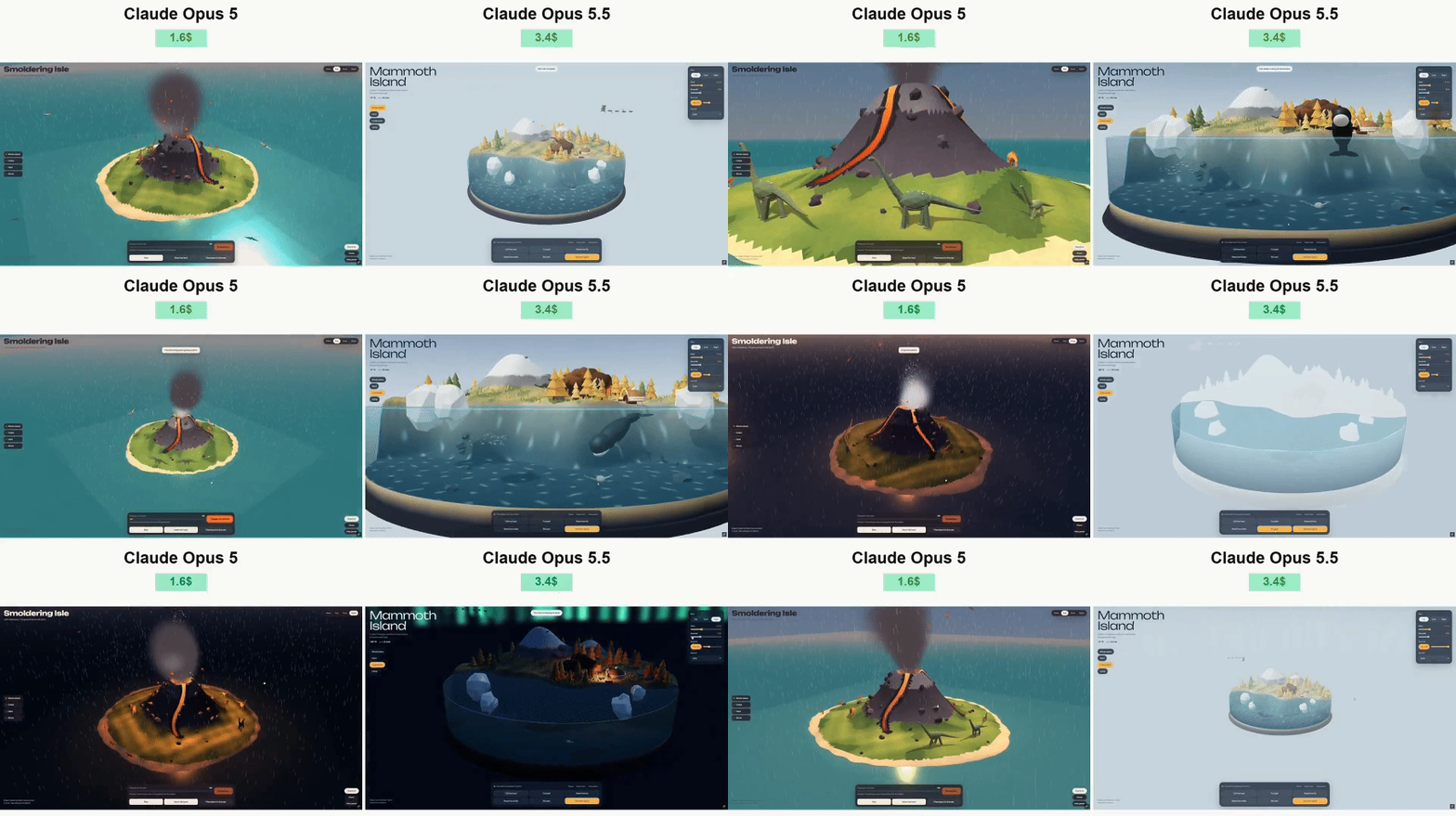 ▲ Detail comparison: Opus 5.5 shows extremely strong scene rendering and micro-texture shaping
Community member @notjazii compared GPT-6 Astra with Claude Opus 5.5; on a lot of front-end and visual output, Opus 5.5 even shows more design sense than Astra:
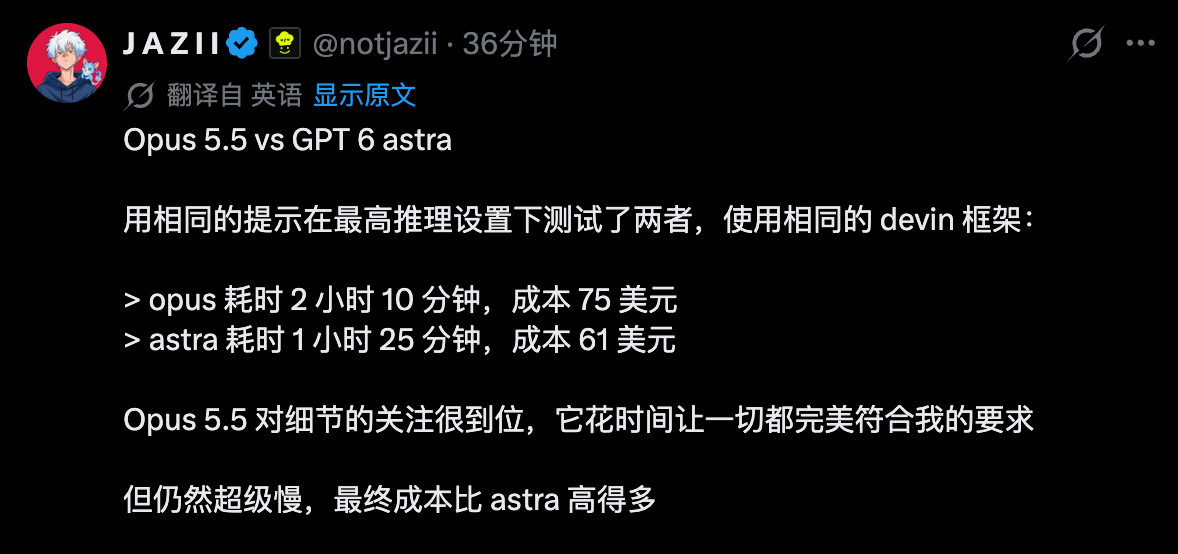 ▲ Community test: Opus 5.5 is stunning overall, but on some long tasks costs more time and money than Astra
Opus 5.5's workflow positioning, summarized:
- Day-to-day feature development, routine debugging, code review: go with Opus 5.5, no hesitation;
- Unattended full automation, architecture base design, zero-tolerance orders: switch back to Fable 5.1.
Fable is the strategist; Opus 5.5 is the front-line general who charges.
2. GPT-6 Sol and Luna: Extreme Efficiency and the Industrial Slam-Dunk of Floor Prices
Now for the productivity tools most people can actually use every day: GPT-6 Sol and GPT-6 Luna.
Both models are already live in the Codex and ChatGPT menus.
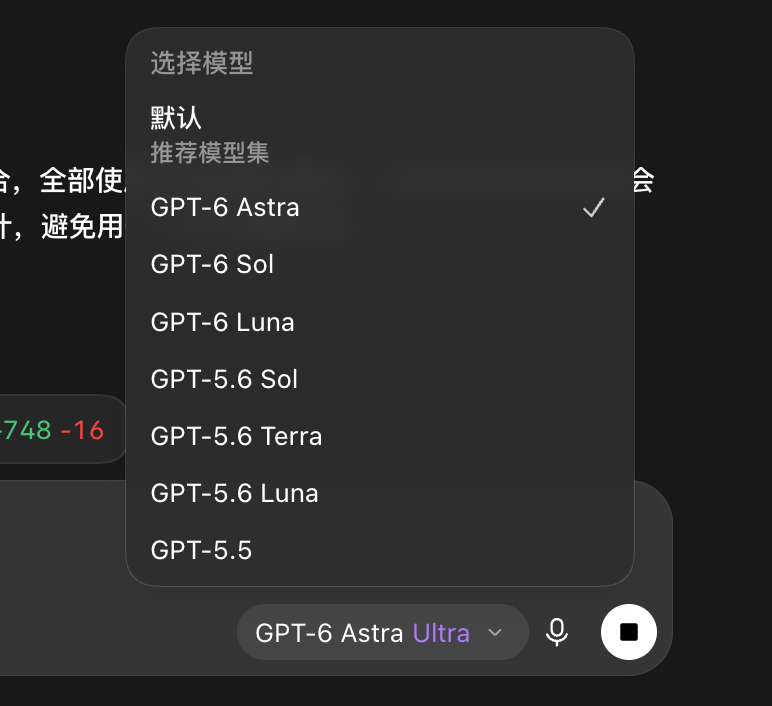 ▲ Client-side model list: the GPT-6 Astra, Sol and Luna matrix is fully open
The biggest pain of the previous GPT-6 Astra came down to two words: expensive, and slow. Ordinary subscribers burn through quota in minutes.
OpenAI's play this time is crystal clear: smash the cost floor and rebuild the efficiency frontier (Pareto optimality).
- GPT-6 Astra: still the ceiling of the whole family, aimed at the hardest problems;
- GPT-6 Sol / Luna: push Astra-generation architecture capability down into nimbler, cheaper, scale-ready scenarios.
Price Butcher: A 50% Cut vs GPT-5.6
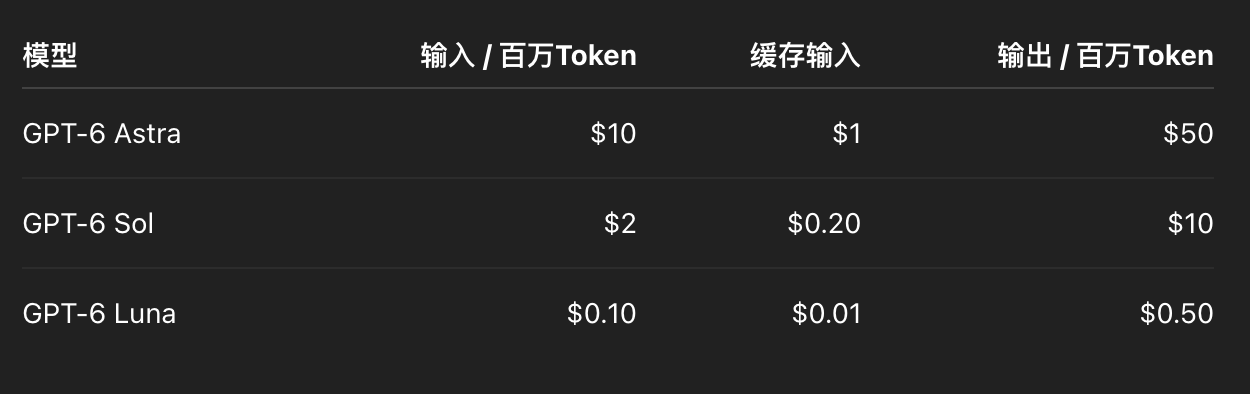 ▲ The GPT-6 family's core pricing tiers in detail
Sol and Luna come in 50% below the equivalent GPT-5.6 tier:
 ▲ Price-cut comparison: mid- and low-tier models get a massive compute-price haircut
The wildest one is Luna:
 ▲ GPT-6 Luna pricing card: input just $0.10/M, output just $0.50/M
On raw input and output alone, Luna is priced below many open-source distilled builds. Cache-hit pricing still needs consideration, but for high-volume, low-cache-hit automation workflows (sentiment monitoring, tens of thousands of daily data extraction and cleaning runs), Luna's price-performance is simply unbeatable.
Specs and Knowledge Cutoff Comparison
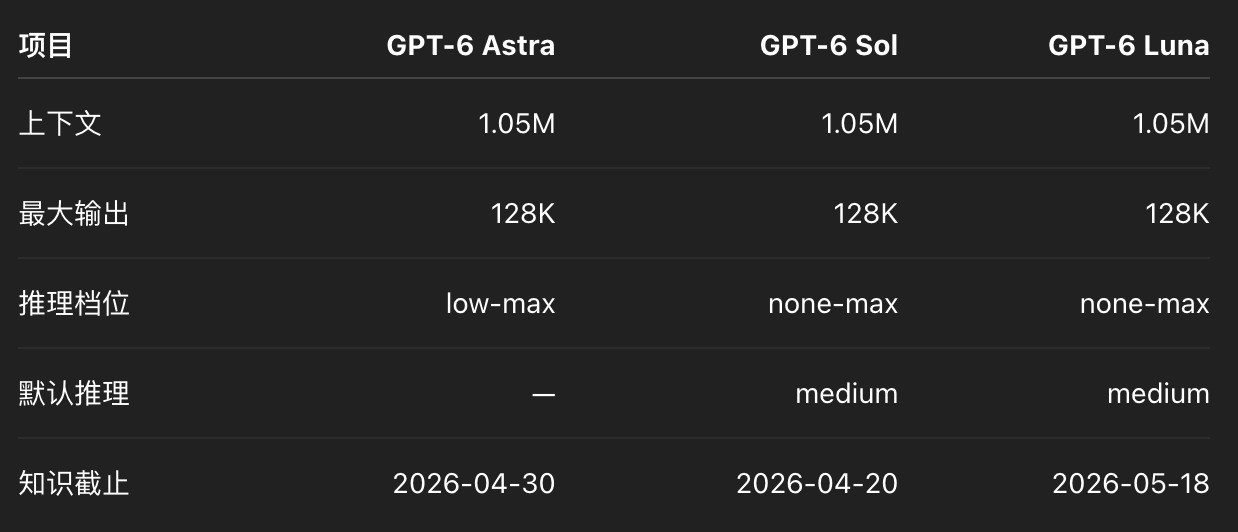 ▲ GPT-6 series key parameters (knowledge cutoffs differ slightly per version)
GPT-6 Sol Tested: Efficiency Over Aesthetics
On Artificial Analysis (AA)'s leaderboard, GPT-6 Sol's capability gain is comparatively steady — it's more "small capability tuning, big cost halving" — while Opus 5.5 is pure "brute-force score chasing to take first place":
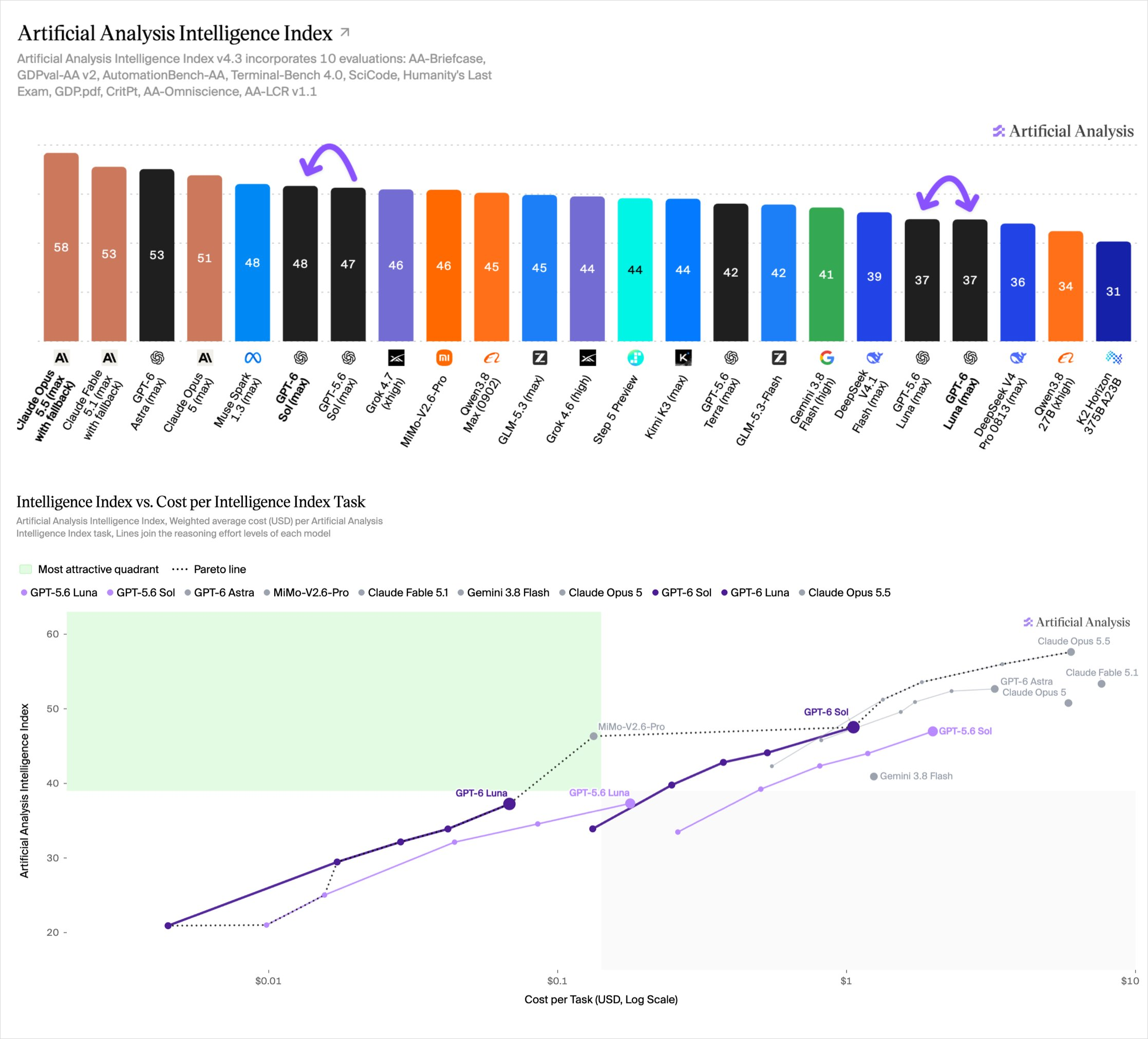 ▲ AA's latest intelligence index and cost distribution scatter plot
On AutomationBench, which measures real business chains (sales, finance, ops, across 47 tool calls):
- GPT-6 Sol (xhigh) scored an excellent 33.2%;
- Cost per task: only $0.27;
- By comparison, Astra low costs 3.9x Sol, and the Fable combo runs 8.9x+ Sol!
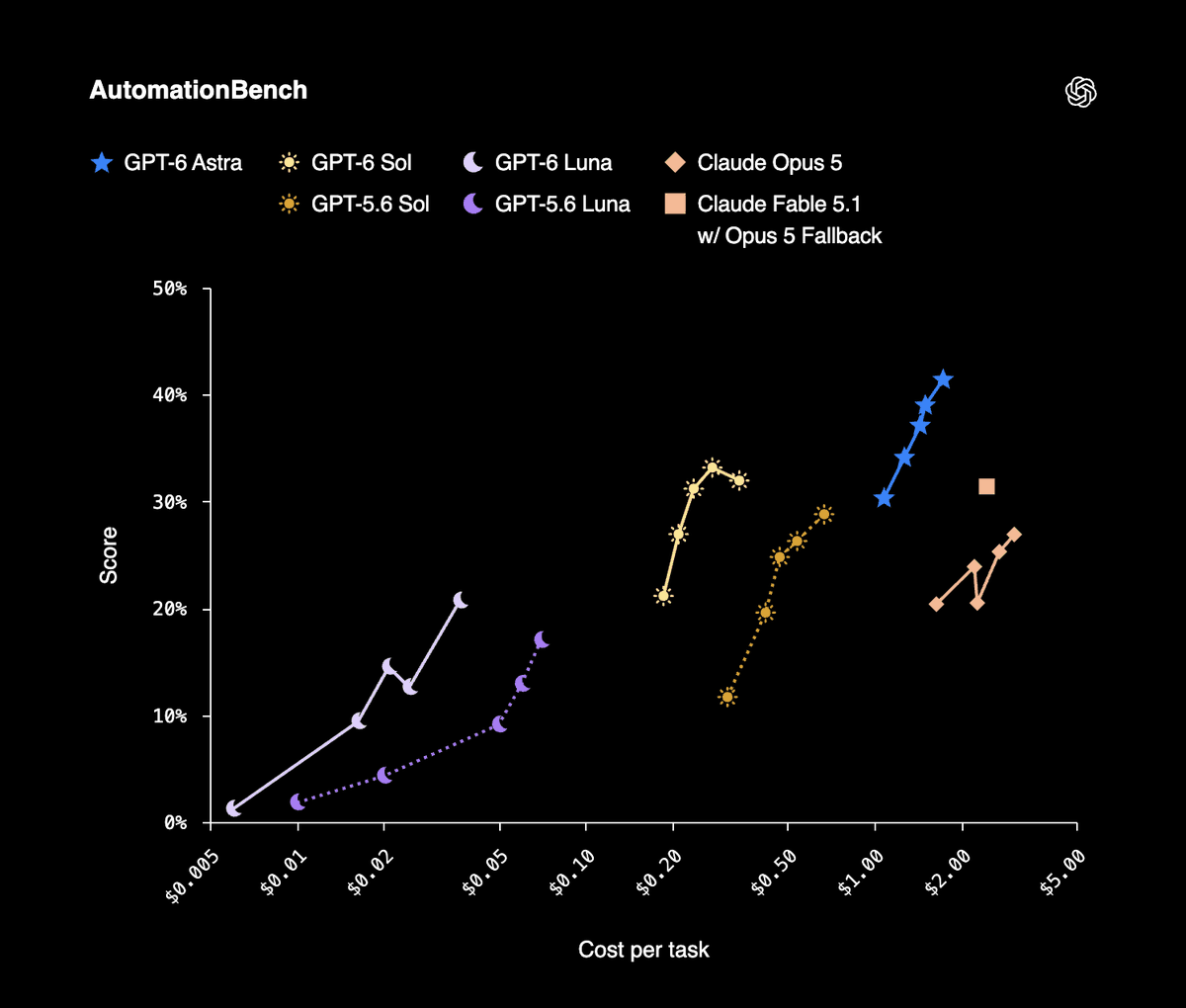 ▲ AutomationBench task score vs cost curves
Even more impressive is token conversion efficiency. The GPT-6 line is sparing with words and goes straight for the point — it never burns your money on useless filler:
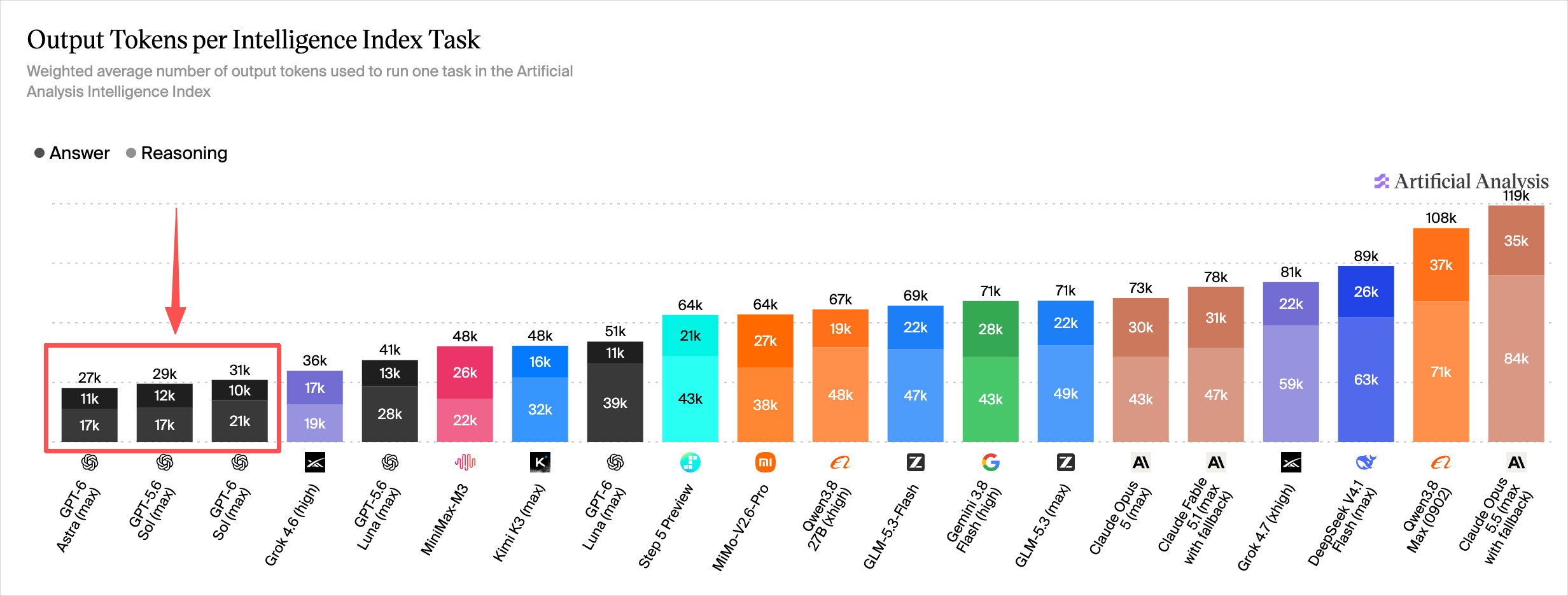 ▲ Output token consumption: OpenAI is markedly better than rivals on information compression and execution density
Hallucination Control and Fact-Checking
The most reassuring upgrade across the GPT-6 line is its ultra-low factual error rate. It's steadily becoming developers' "all-purpose fact-checker," with hallucination rates pushed to a historic low (in production, run reasoning at High or xHigh):
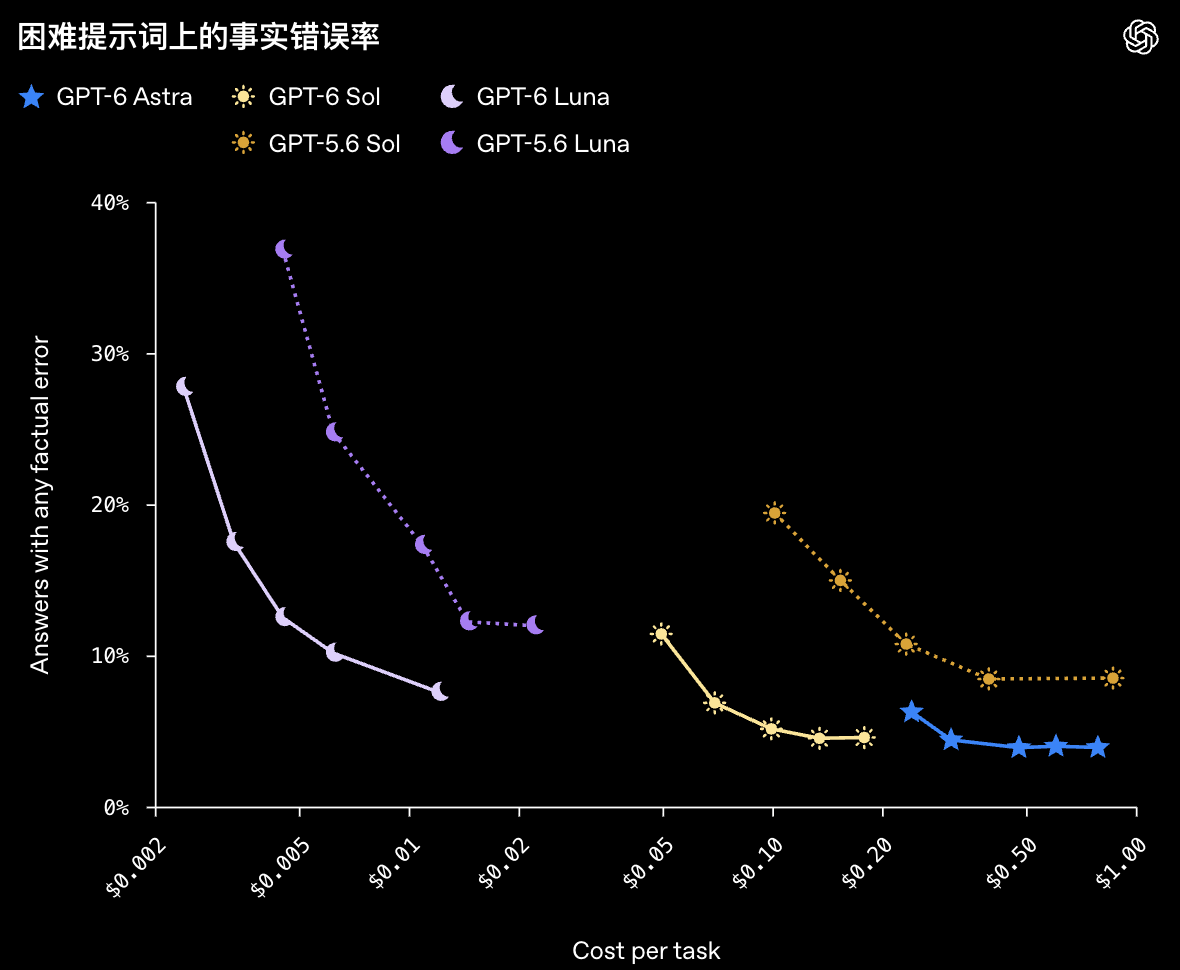 ▲ Factual error rate on hard prompts: hallucinations are comprehensively suppressed at high reasoning tiers
The Cost of Precise Product Tiers: Degraded Spatial Aesthetics
The price of a 70% cut is a heavy trim on long-chain aesthetics and spatial modeling detail.
Take Blender modeling control:
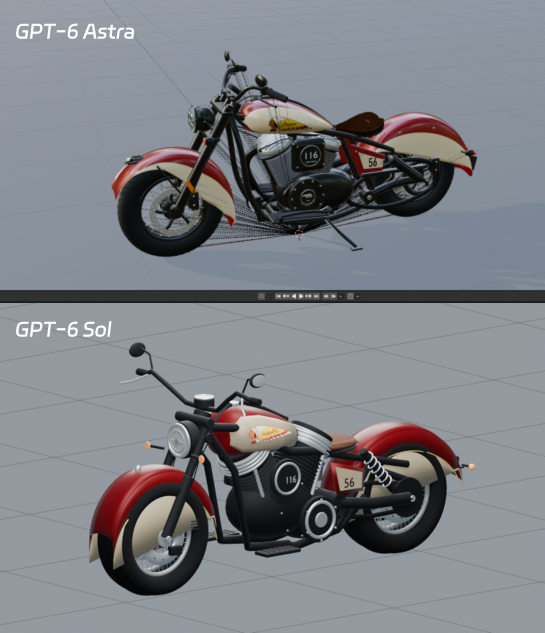 ▲ Retro motorcycle 3D modeling test: Astra's structure is tight, Sol shows visible deformation and missing parts
And the classic Temple of Heaven (Qinian Hall) generation test:
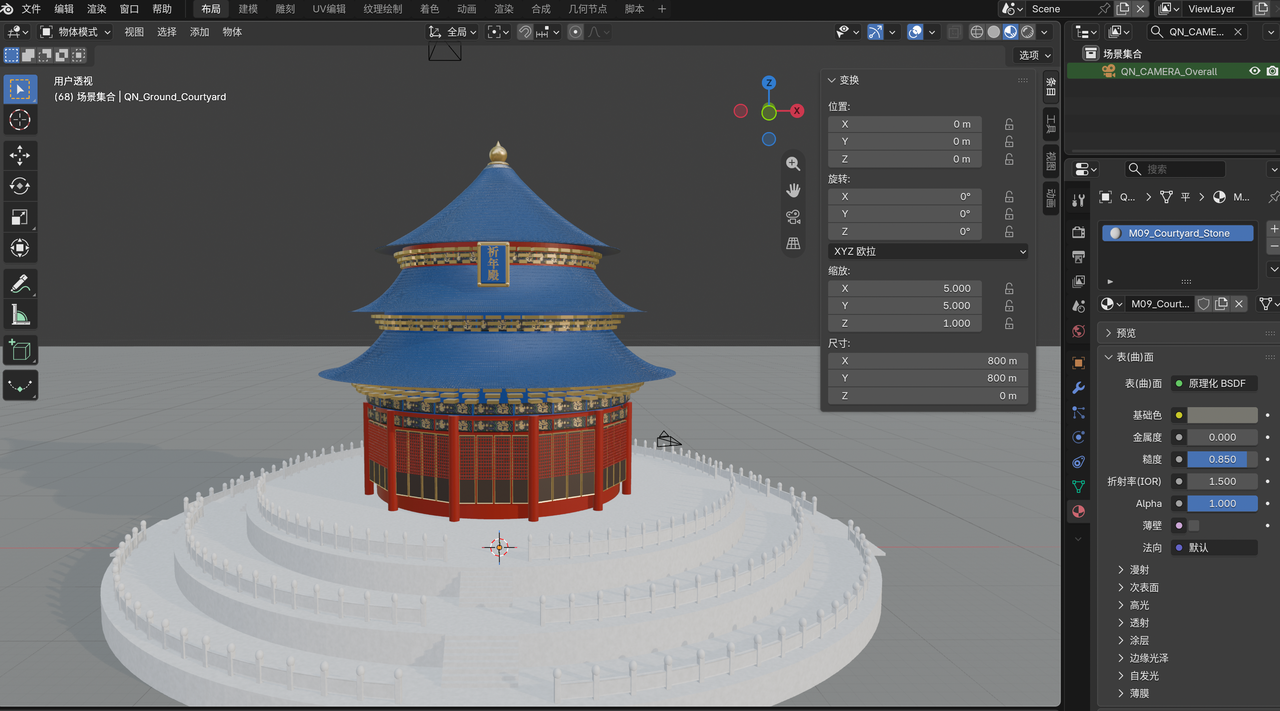 ▲ Astra's Temple of Heaven: brackets, beams, columns and steps in rigorous proportion
 ▲ Sol's Temple of Heaven: doors, windows and layout show obvious misalignment and boolean-op bugs
But as an engineering lieutenant at 70% less cost, that trade-off is entirely reasonable.
Sol and Luna are now rolled out across Work and Codex:
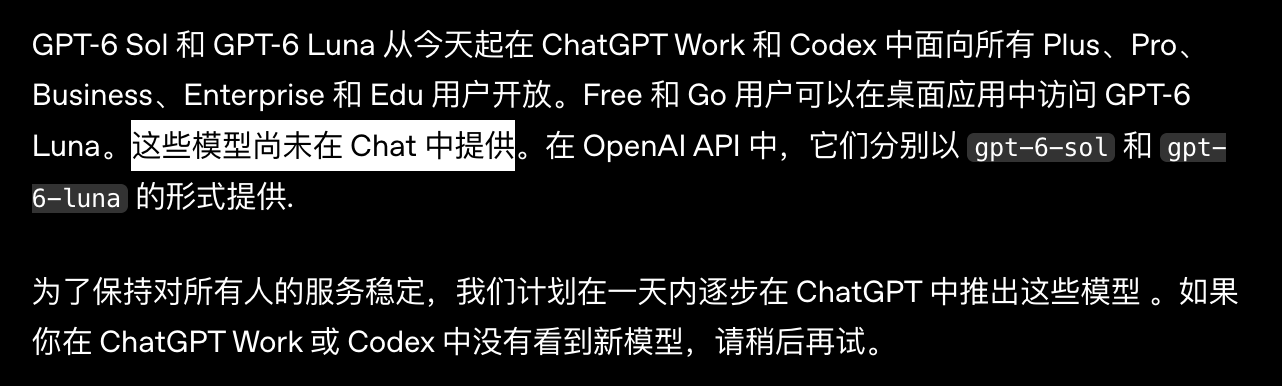 ▲ OpenAI announcement: new models go to workflow and coding scenarios first; plain chat windows remain in canary
Selection Guide: With Models Exploding, What Should You Pick Today?
With this many models to choose from, here's the practical selection advice everyone actually wants:
1. Your Claude subscription is stable (no risk-control bans)
- Recommendation: go Claude combo, no overthinking.
- Pairing: complex global planning and low-level architecture → Claude Fable 5.1; actual code landing, bug fixes, feature development → Claude Opus 5.5 as your daily driver.
2. Claude is restricted for you, but you can reach overseas models reliably
- Recommendation: embrace the ChatGPT / Codex industrial ecosystem.
- Pairing: the GPT-6 line has the better overall consumer experience and the most mature ecosystem. Top-level architecture → GPT-6 Astra (or Pro); routine high-volume engineering → GPT-6 Sol (xHigh); bulk data cleaning and automation backends → hand it all to GPT-6 Luna.
3. Domestic Chinese models are your main workflow
- Recommendation: Qwen, Kimi, GLM, MiMo and DeepSeek all currently offer very high practical value. Suggested tiers:
- Top-tier reasoning and heavy analysis: Kimi K3 / Qwen 3.8 Max
- Cost-effective everyday coding: GLM-5.3 / MiMo v2.6 Pro / DeepSeek V4.1 Flash
- Subscription advice: buy monthly or quarterly only — never hoard annual plans. The industry's pace of price cuts and iteration has come completely off the rails.
It used to be giants monopolizing the high end while domestic models competed on price-performance; now OpenAI and Anthropic have flipped directly into "high, mid and low tiers, all of it" industrial domination.
But for every developer: compute cost roughly halves every quarter, and intelligence is rapidly becoming cheap public infrastructure like water and electricity.
The great productivity boom that belongs to everyone is finally here.
Appendix: Channels Available in China
| Channel | URL | Best for |
|---|---|---|
| High-speed GPT mirror in China | https://trygpt.asia/list/#/home | Browser-based chat without a VPN, lightweight workflow testing |
| MomoAI monthly plans | https://momoai.asia/home | Heavy users who want a stable monthly subscription |
| All-model API aggregator | https://tryallapi.com/ | Developer calls, low-latency direct connection, one-stop multi-model access |
| Official top-up channel | https://chongzhi.trygpt.asia/ | Removing the overseas credit-card barrier, official direct top-up |